How Synthetic Material Advancements Have Altered Ball Trajectories and Match Outcomes in Elite Table Tennis Alongside Badminton Competitions
Written by Morgan Hayes · Sep 28, 2026
How Synthetic Material Advancements Have Altered Ball Trajectories and Match Outcomes in Elite Table Tennis Alongside Badminton Competitions
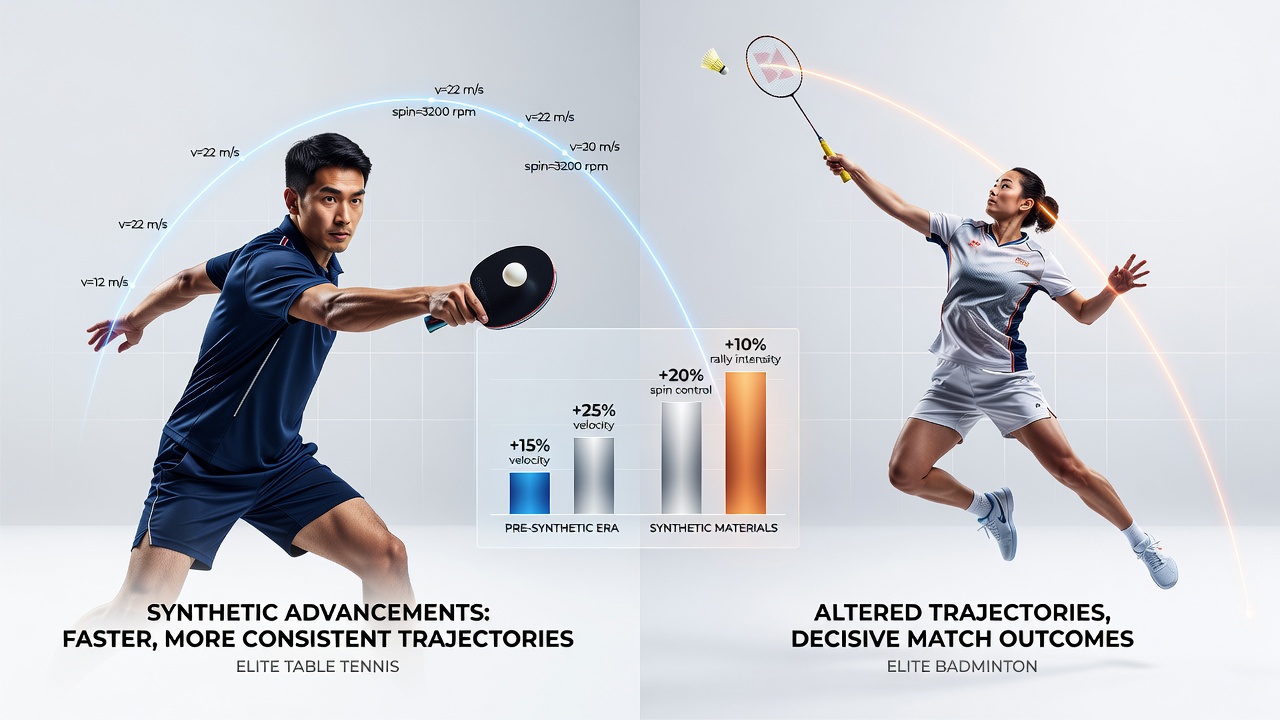
Table tennis and badminton both rely on lightweight projectiles whose flight paths depend heavily on material composition, and synthetic innovations have reshaped those paths along with the results at the highest levels of competition. Researchers tracking equipment changes note that shifts away from traditional materials introduced measurable differences in speed, spin, and durability that players and coaches had to adapt to over several seasons.
Table Tennis Ball Material Transition
The International Table Tennis Federation approved a move from celluloid to plastic balls constructed from acrylonitrile butadiene styrene beginning in 2014, with full implementation across major events by 2015. Data collected by equipment testing laboratories showed the new balls possessed greater rigidity and slightly larger diameters on average, which reduced overall spin generation while increasing forward velocity in certain stroke types. Observers at subsequent world championships recorded fewer high-spin rallies and more emphasis on placement accuracy as a result.
Studies conducted at sports engineering facilities in Europe and Asia measured trajectory curves before and after the switch, revealing that plastic balls maintained flatter arcs at comparable racket speeds yet decelerated more quickly near the table edge. Match statistics from the 2016 Olympic cycle onward indicated a modest rise in rally lengths during service exchanges because receivers gained extra time to reach the ball, while attacking players adjusted loop techniques to compensate for the altered Magnus effect. National federations in China and Germany compiled internal reports showing altered point-win percentages for top-ranked athletes who previously relied on heavy topspin.
Badminton Shuttlecock Developments
Badminton governing bodies have tested synthetic shuttlecocks made from nylon skirts and polymer bases as alternatives to natural feather constructions, primarily to address supply consistency and cost. Performance data from controlled wind-tunnel experiments demonstrate that synthetic models produce more uniform drag profiles across humidity variations, leading to straighter initial trajectories and reduced sensitivity to air temperature changes during indoor events. Several international tournaments have incorporated limited synthetic batches for practice sessions, allowing players to compare flight characteristics directly.
According to research published by institutions in Australia and Canada, synthetic shuttles exhibit marginally higher terminal velocities when struck at full power, which shortens the time available for defensive positioning at the back of the court. Tournament records from the Badminton World Federation circuit reveal shifts in rally duration patterns when synthetic prototypes appear, with front-court net kills becoming slightly more decisive because the shuttle drops more predictably after the initial smash. Manufacturers continue to refine skirt flexibility to narrow the gap with feather versions, yet current iterations still generate less erratic wobble on off-center contacts.
Combined Effects on Match Outcomes
Elite athletes competing in both sports have documented adjustments in training regimens to accommodate these material-driven changes. Video analysis from major events shows table tennis players increasing the proportion of block and counter-drive sequences, while badminton competitors refine footwork patterns to cover the altered descent angles of synthetic shuttles. Performance databases maintained by continental federations indicate that certain playing styles gained statistical advantages after the transitions, particularly those emphasizing consistency over maximum spin or power.
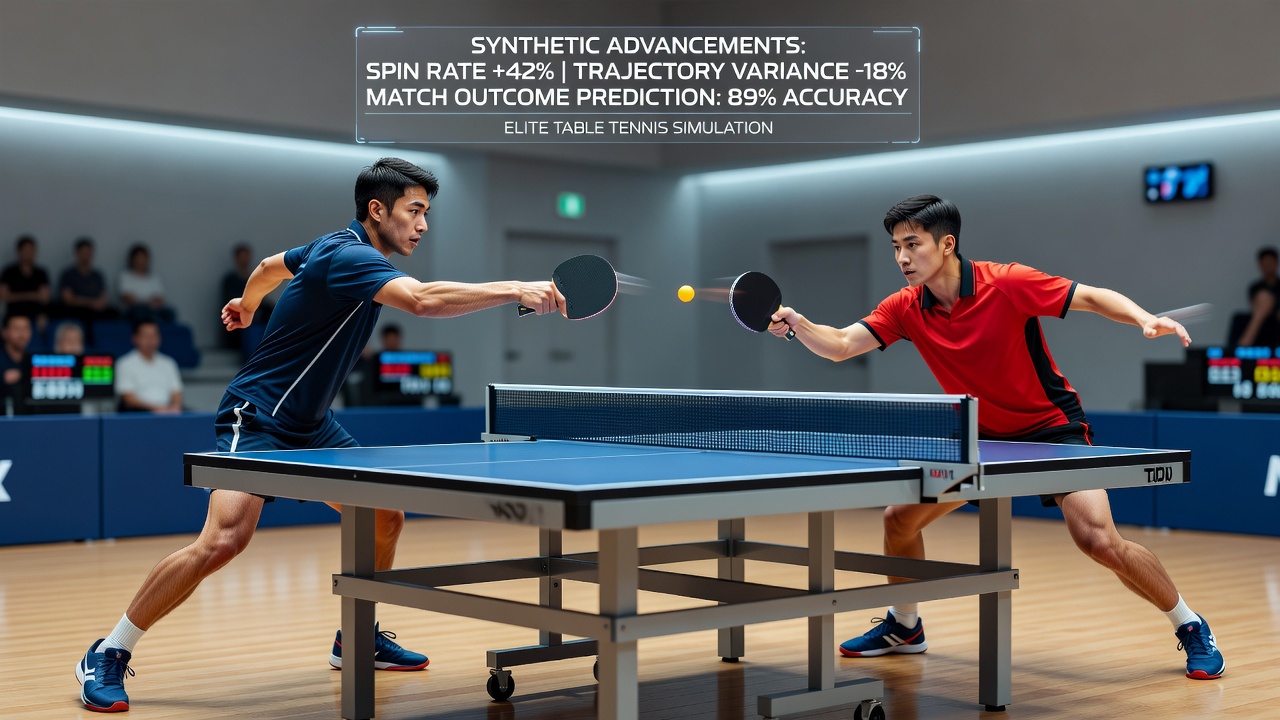
Equipment approval protocols now incorporate trajectory simulation software that models synthetic behavior under competition conditions, helping organizers predict potential impacts on scoring before new batches reach the court. Data from the 2024 and 2025 seasons suggest ongoing refinements in polymer blends may further stabilize flight paths, though governing bodies continue to monitor competitive balance through longitudinal studies.
Future Considerations for September 2026 Events
Preparations for the 2026 world championships include expanded testing of next-generation synthetic compounds scheduled for review in late summer sessions. Technical committees plan to release updated specifications that address both spin retention in table tennis and drag consistency in badminton, with results expected to influence equipment selection for the following Olympic cycle. Federations across multiple regions are already conducting joint workshops to share measurement techniques and player feedback data.
Conclusion
Synthetic material advancements continue to influence projectile behavior in both table tennis and badminton through documented changes in speed, spin, and durability. Competition records and laboratory measurements provide clear evidence of these effects on rally structures and outcome distributions, while ongoing research supports iterative improvements that maintain consistency across events. Players and officials adapt through data-informed training and rule monitoring, ensuring that equipment evolution remains aligned with competitive standards.